
It Works. It really works.
Last August I published a post about the reading lie being told in the United States. I had listened to the podcast Sold a Story which detailed Emily Hanford’s investigation into the Marie Clay and Lucy Caulkins teaching methods and their impact on early elementary students in the US. And I was alarmed at what I heard. I was formerly an administrator at a school where I allowed teachers to use Lucy Caulkins curriculum. But as I listened to the description of both the methods as well as the neuroscience explaining why the methods don’t work, I found that Emily’s conclusions made a LOT of sense.
I started reading everything I could find on childhood development in regard to language, letters and words, and how children’s brain decode, decipher, and deconstruct the written word. I also became a devout student of phonics - how to use them and how to teach them to children.
This was all new to me. First of all, when I was a child, for whatever reason, the part of my brain that was connected to decoding written language was firing on all cylinders from the get-go, just as some children seem to be born with an aptitude for numbers or for music or athletics. Reading always “made sense” to me, and I was reading long before I went to kindergarten, so I had absolutely no recollection of what it was like to learn to read.
Second, my teaching experience was almost exclusively high school, except for the one-year stint teaching third and fourth grade, which I talk a little bit about in The Reading Lie (linked above.) But I knew that some of our homeschool families would be enrolling kindergarteners at LTCES this year, and we wanted to make sure we were using the best practices to support them as their children tackled learning to read. I was determined that science-based reading strategies would to be at the center of the process. (It just makes sense to work with our brains in the way God created them!) By August, I felt ready to instill those strategies.
So, what have we been doing? Here are the steps we have followed. The amount of time our children spend on each step varies with the child’s individual aptitude, attention span, desire, and pacing, but the learning-to-read process always follows the same order.
- We start introducing the letters of the alphabet for visual recognition at the same time that we start asking children to identify and mimic the starting and ending sounds (consonants) of simple words. As much as possible, we use multisensory activities along with more traditional ones (more on that later.
- Then we teach the children the sound each letter makes (for letters with multiple sounds, like “c”, we focus on just one sound to begin with, like the hard “c” sound in the word cat.) A wonderful, albeit older, resource for this is the The Letter Factory videos by LeapFrog. And once children start sounding out words, there are more videos in the series, including The Talking Words Factory. Another method I observed with an excellent 1st grade teacher is The Phonics Dance! These days there are so many great phonics resources out there, and if you google science-based reading, you will find many options.
- Next comes simple sound blending (also called decoding), teaching our kids to slide sounds together. This is also where we cement the habit of going from left to right. We introduce short vowel sounds and begin sounding out CVC words (consonant-vowel-consonant) like wag, bet, tin, pod, cup.
- We slowly integrate high-frequency words that do not follow the usual phonics rules but appear often in beginning reading texts, such as “the” or “said”. These words are taught separately.
- Children begin to practice two syllable words, segmenting them into individual sounds that they can sound out using their phonics skills.
- Skills are reinforced and reviewed consistently to build confidence and fluency. We use decodable readers like the Orton Gillingham readers, which feature short stories that contain the phonics patterns the students are being taught.
As much as possible, we try to incorporate multi-sensory activities to help our children in the learning process. For example we tape letters up around the learning area and have students move around the room to the correct letter when it is said aloud. We sing songs. We do phonics movements. We play lots of games. We let our students trace letters on light boards, which they really enjoy (who wouldn’t?).
One surprising success — our students love to use the flashcards we created for learning CVC words.
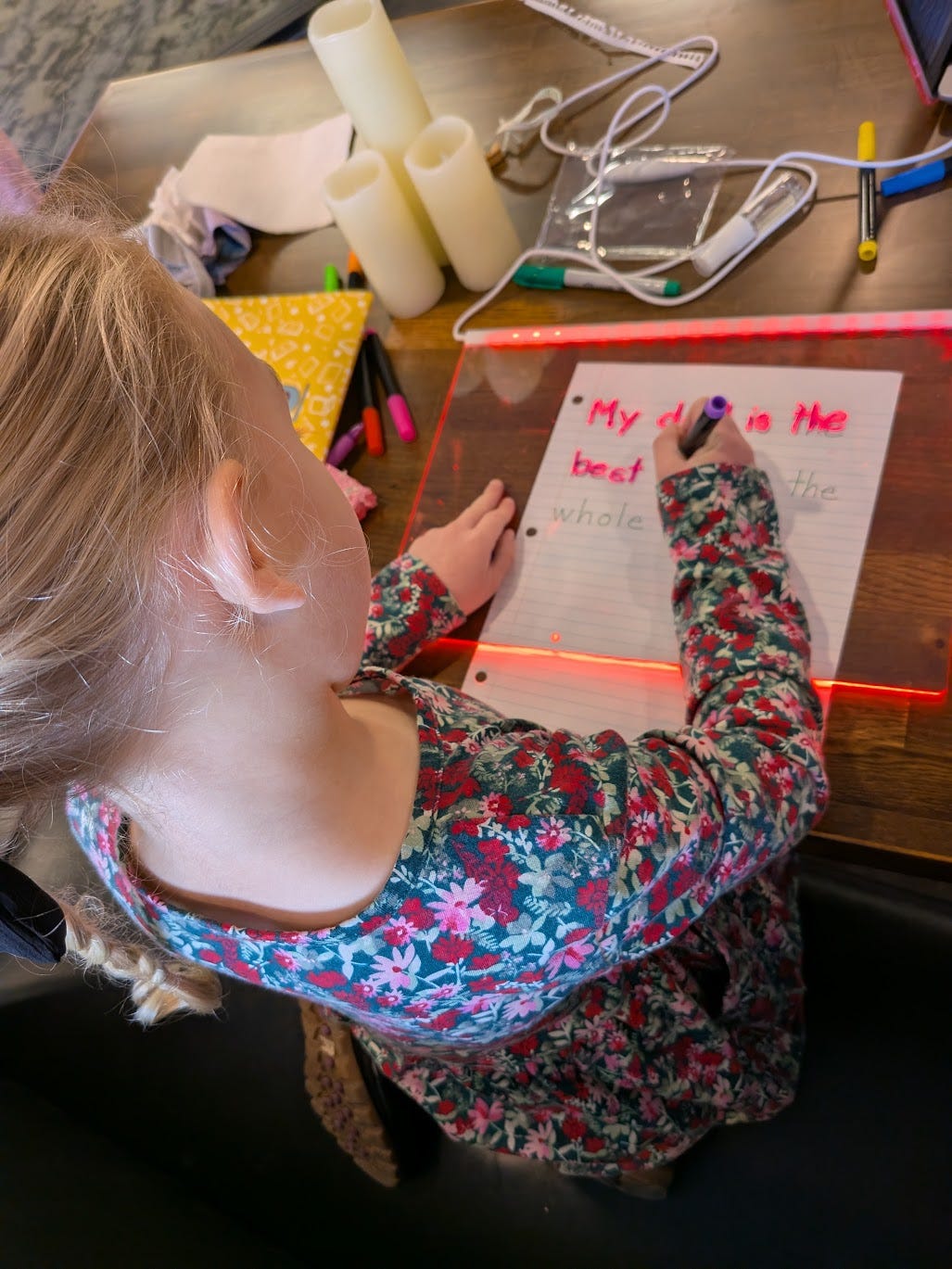

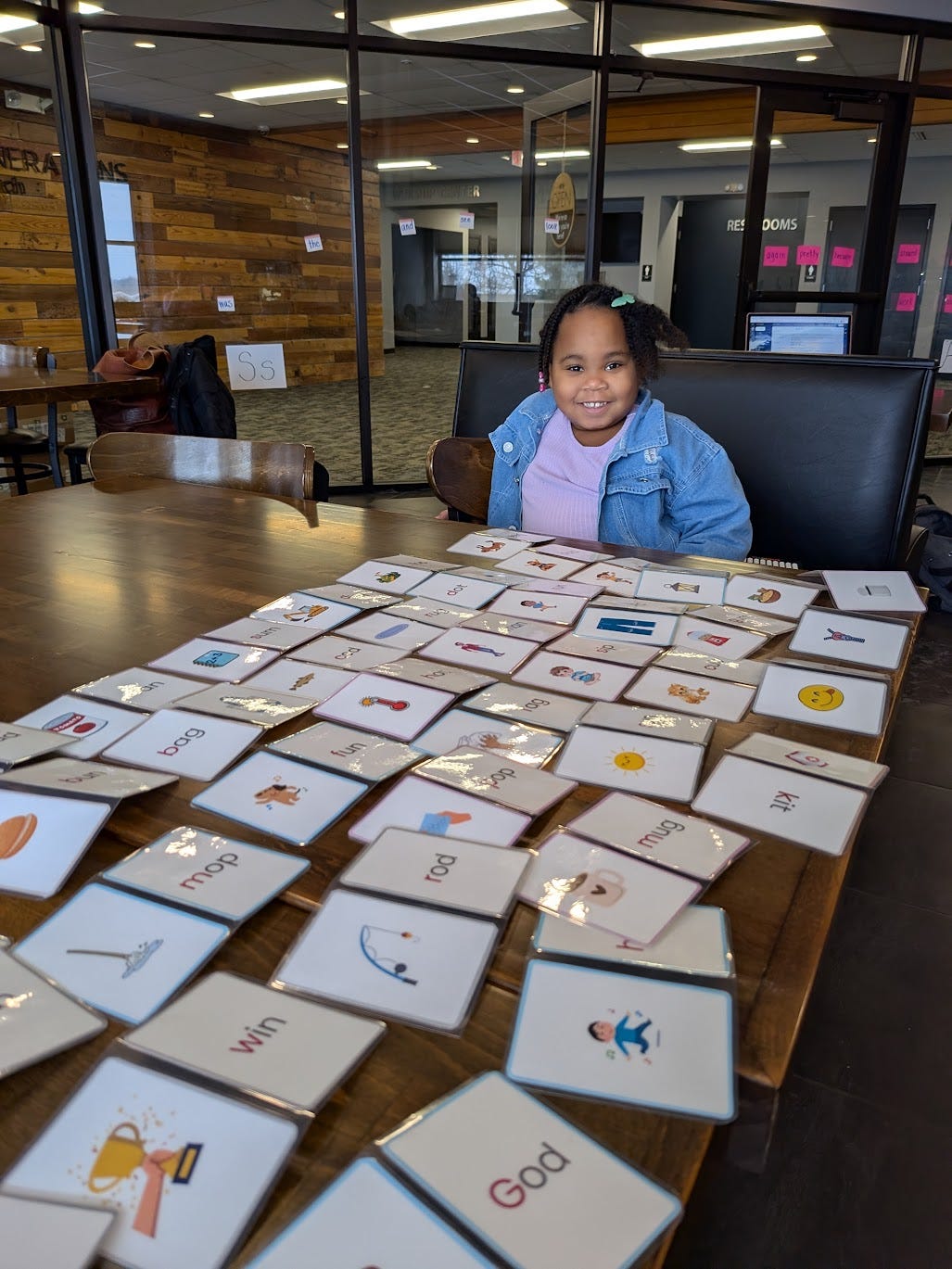
And it really, really works. We are seeing amazing success. Ja’Kaylah, in the picture above, was beyond excited to read 40 different CVC words and 10 sight words all by herself (and without the aid of the illustrations). Here is one of our tutors, Josh, giving Ja’Kaylah words to sound out.
Wow! Watching a child begin to decode written language is one of the most exciting things I have experienced as an educator, because I know the impact it will have on the rest of her life. And I know I don’t need to convince any of you of the importance of mastering reading — you get it. As we support our families and children in their educational journey, we want to reinforce to all of you as well — there are many tools out there to help you as you teach your children to read, and one of the most valuable is your time, patience and intention, giving loving guidance and encouragement.
By the way, we are not affiliates of any of the products we listed here, with the one exception of our own flash card set, and we do not make money from any third-party vendors. With that being said, we would love to hear from you what resources, activities, and products you are finding to help in the reading journey. Let us know what you use in the comments!
Feel free to reach out to us with any comments or questions - we are committed to helping in anyway we can, because we are passionate about education. My email address is listed in the profile.
God bless you as you invest in our most precious resources — our children.